
An introduction to data centers and water usage.
Water usage:
Data centers pose significant risks to our water supply due to their high cooling demands and indirect water use from electricity generation. In order to protect the high-density computing hardware, data centers use potable(drinkable) water from sources like municipal water or local aquifers, with 70-80% lost to evaporation. All data centers consume large amounts of water over time, either directly or indirectly. Here’s how:
Closed-loop water cooling.
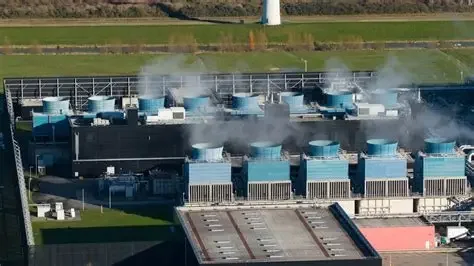
Chilled water systems are commonly referred to as cooling loops. they operate by chilled water in the loops being circulated through Computer Room Air Handlers (CRAH units) that contain chilled water coils. This process cools the air before it reaches the server farm racks. Cooling towers are often used in these systems to reject heat outdoors via evaporation.
Direct-To-Chip (D2C) cooling is a more precise process, targeting high-heat components with chilled liquid. though costly to implement, it is the most efficient, environmentally friendly, and sustainable option for cooling systems.
Limitations and Trade-offs
Despite the advantages, fully closed-loop systems are not water neutral. Evaporation, blowdown, and heat rejection still require water and energy input, especially at hyperscale facilities.
Closed-loop systems often increase electricity demand by 10-40% compared to evaporative cooling due to the use of pumps, chillers, and heat exchangers.
Evaporative cooling.
Evaporative cooling uses water evaporation to cool the air without refrigerants. using moistened cooling pads, hot outside air passes through where water absorbs the heat before evaporation. This reduces the air temperature.
Limitations and Trade-offs
While evaporative cooling systems use water instead of refrigerants, it consumes significant amounts of water. This raises a lot of sustainability concerns. this process also comes with contamination risk by releasing impurities into the air.
Power Generation (indirect water usage)
Water is also consumed in power generation, particularly from fossil-fuel plants, which supply electricity to data centers. This further amplifies water stress. Globally, one-quarter of existing data centers and nearly one-third of those under construction are in regions projected to face increased water scarcity by 2050.
sources: University of Chicago, Gneuton, EESI, Harvard Science Review,